Striper TrackerSTRIPER TRACKER

FRIDAY EDITION · OCTOBER 23, 2026

Northern New Jersey reaches a fall-run milestone

Tracking the Fall Striper Migration from Cape Cod to Cape May — Where the Run Stands, What's Coming Next, and This Week's Featured Fishing Forecast.

Coastwide Migration Outlook

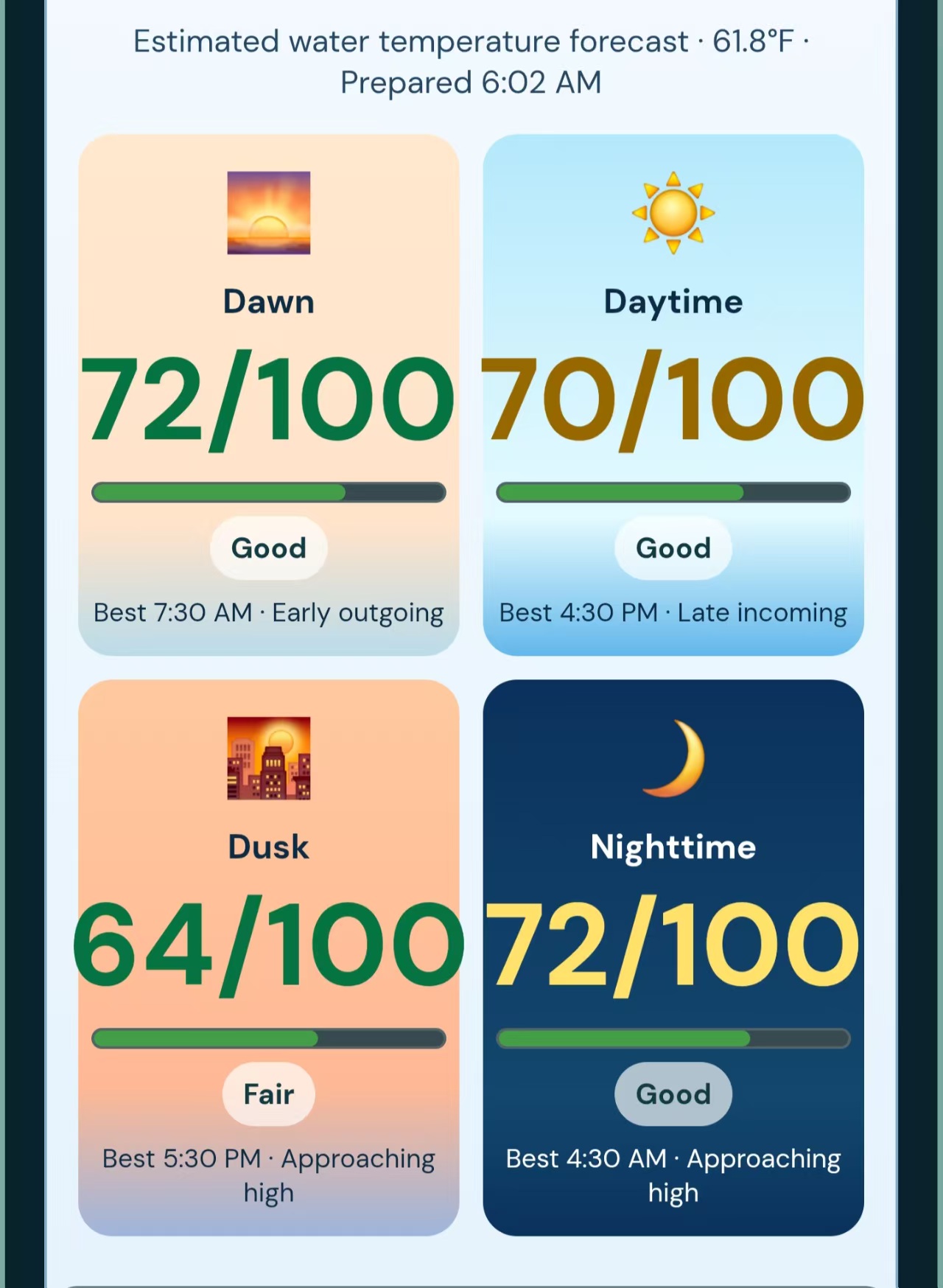
At the recorded October 23 cutoff, the modeled leading edge was near Sandy Hook, with LBI’s arrival estimated around October 29. Posted ocean temperatures ranged from 55.4°F at Outer Cape Cod to 61.8°F at Sandy Hook. Seasonal cooling helps shape the southbound movement; over the next 72 hours, watch local temperatures and the daily and hourly forecasts for favorable fishing opportunities.

How the Migration Works

THE COAST, AT A GLANCE

Cold Push Map — Atlantic Fall Migration

Following the cooling ocean from Cape Cod to Cape May.

Temperature capture: 2026-10-23T07:17:48.271Z · Model capture: 2026-10-23T06:02:55.772Z

MASSACHUSETTSCONNECTICUTNEW JERSEYATLANTICOuter Cape Cod: 55.4°F. Ocean Water Temperature · Observation time unavailableMontauk Point: 60.5°F. Ocean Water Temperature · Observation time unavailableSandy Hook: 61.8°F. Ocean Water Temperature · Observation time unavailableLong Beach Island: 61.5°F. Ocean Water Temperature · Observation time unavailableCape May: 61.1°F. Ocean Water Temperature · Observation time unavailableOuter Cape Cod · 55.4°FMontauk Point · 60.5°FSandy Hook · 61.8°FLong Beach Island · 61.5°FCape May · 61.1°F

Existing site coastline and supported towns retained. Maine and Delaware readings and additional coastline coverage are not supplied by this source.

FIVE COASTAL CHECKPOINTS

North-to-South Cooling

Posted readings at the capture time; historical change rates are unavailable for these town records.

Outer Cape Cod55.4°F55.4°F
Montauk Point60.5°F60.5°F
Sandy Hook61.8°F61.8°F
Long Beach Island61.5°F61.5°F
Cape May61.1°F61.1°F

The Run Is Building

The arrival of the leading edge marks the beginning of the local fall striper run—not its peak or its end. As ocean temperatures cool into favorable ranges, additional waves of migrating striped bass can move through the area, often creating excellent fishing opportunities over the following weeks.

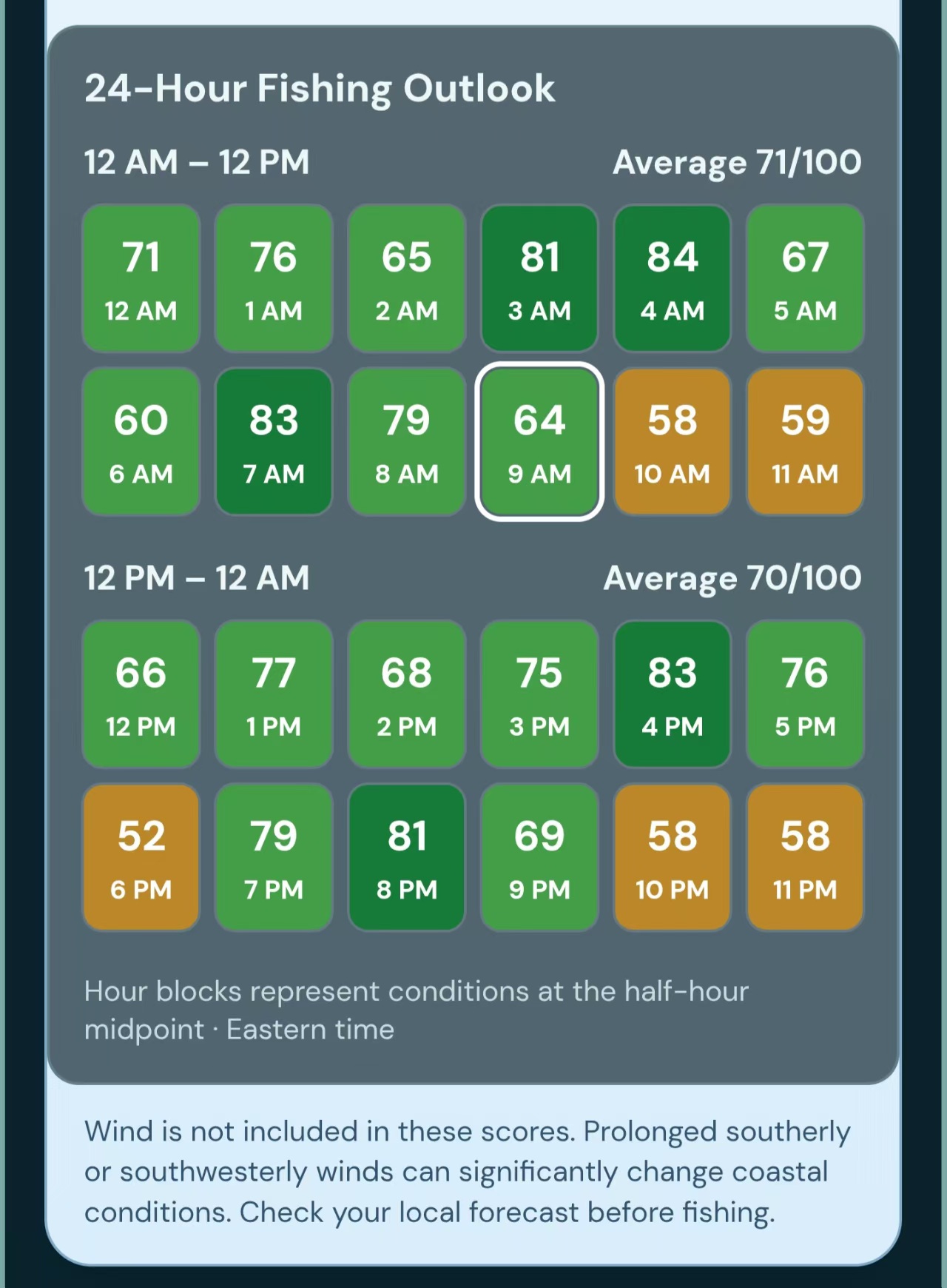
As the run develops, use Striper Tracker’s daily and hourly fishing forecasts to find the most favorable times to fish.

Please read to understand our migration strategy and research.

Understanding the Fall Striper Migration

Striper Tracker follows the fall migration in stages. First, ocean temperatures in northern waters help signal the beginning of the southbound movement. Our migration model then estimates when the leading edge reaches locations farther down the coast. As temperatures continue dropping into favorable ranges, additional waves of striped bass can arrive, building the local run. Once the migration is underway, our daily and hourly forecasts help identify the best fishing opportunities using water temperature, tides, moon and light conditions.

The Arrival

The migration tracker estimates when the leading edge of the southbound run reaches a town. Arrival does not necessarily mean peak fishing.

The Building Run

Additional striped bass may continue moving through that location for weeks as ocean temperatures cool. A status such as “Run Past” or “Possible South” refers to the leading edge moving south, NOT the end of the local fall run. Cooling can improve seasonal opportunities within favorable temperature ranges, but continued cooling can eventually reduce local opportunities.

The Daily Bite

Once migrating fish are present, local water temperature, tide, moon, and light conditions influence feeding opportunities. The existing four-period and 24-hour forecasts help fishermen identify favorable fishing times. These forecasts remain separate from the migration-arrival model.

The Research Behind Striper Tracker

Striper Tracker is built on extensive research into striped bass migration, scientific tagging studies, NOAA ocean-temperature records, seasonal cooling patterns, and environmental factors that influence feeding behavior. We combine this research with current ocean-temperature observations and established fishing principles to develop our migration outlooks and daily fishing forecasts.

Explore Our Research & Methodology

The migration tracker tells you when the run begins. Cooling temperatures help explain how it develops. Daily and hourly conditions help you decide when to fish.