 STRIPER TRACKER
 · DID YOU KNOW?
Did You Know? The Fall Run Was Delayed. Now the Water Is Dropping — Just Ahead of the Full Moon. Check Out the New Striper Tracker Map!
The 2026 fall striped bass migration has developed differently from 2025. Historical ocean-temperature comparisons suggest that parts of the Northeast Atlantic coast stayed roughly 2–3°F warmer in mid-November 2026 than on the same dates in 2025. That difference matters, because seasonal cooling is one of the environmental factors that influence the fall striped bass migration.
Now temperatures are falling, and the November 24 full moon is approaching. Could that combination open up more late-November surf-fishing opportunities?
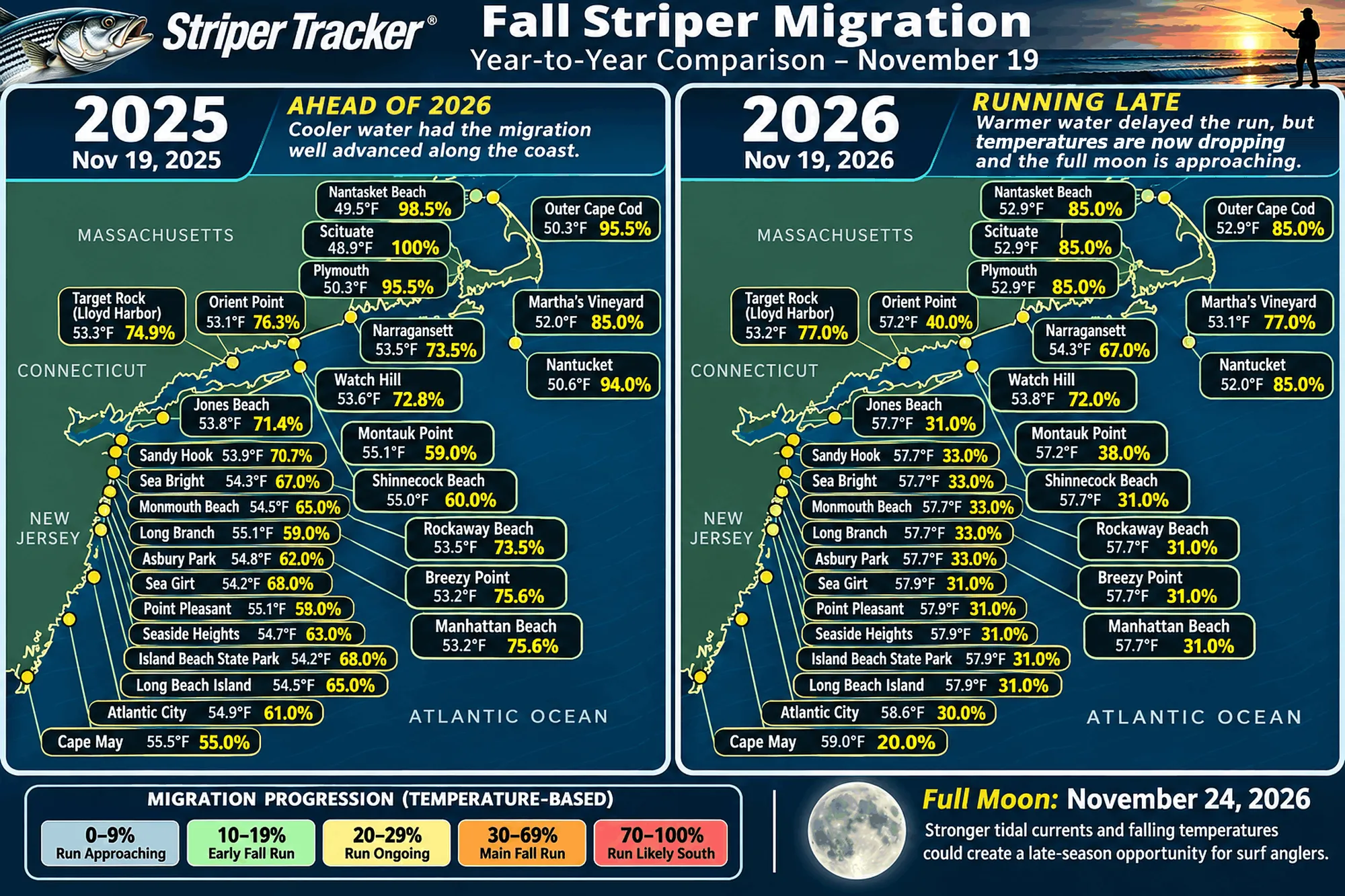
How to read the map: each percentage is Striper Tracker's temperature-based migration progression, calculated from ocean temperature. It is not a count of fish. The 2025 percentages are reconstructed estimates from historical ocean temperatures, not recorded fish counts. The 2026 percentages are what the live tracker showed on November 19. The tracker uses each town's recent temperature history, so a percentage can differ slightly from the single reading shown.
The northern migration: Outer Cape Cod
On November 19, 2025, the ocean off Outer Cape Cod read 50.3°F. In Striper Tracker's model, that equals 95.5% temperature-based migration progression. On November 19, 2026, the reading was about 52.9°F, and the tracker showed 85%.
So on this date the temperature-based progression was further along in 2025. In our model, 50°F corresponds to about 97% progression and 49°F to 100%. At 52–53°F the northern migration is already well advanced, but some migrating fish may still be moving south.
Sandy Hook and the New Jersey fall striper run
| Location | Nov 19, 2025 water · progression | Nov 19, 2026 water · progression |
|---|---|---|
| Outer Cape Cod | 50.3°F · 95.5% | ≈52.9°F · 85% |
| Sandy Hook | 53.9°F · ≈70.7% | ≈57.7°F · ≈33% |
On November 19, 2025, Sandy Hook had cooled to 53.9°F, about 70.7% progression. That is the point where Striper Tracker's model starts to treat the run as likely moving south. This year the same date found Sandy Hook near 57.7°F, about 33% progression.
In Striper Tracker's November 19 readings, the New Jersey coast from Sandy Hook through Long Beach Island was about 57.7–57.9°F. That range sits inside the main fall migration in our model, and it is roughly 4°F warmer than Sandy Hook was on the same date last year.
Is the fall run shifting later?
Warmer water and a slower seasonal cooldown can push the temperature-based timeline later. But water temperature is not the only factor. Striped bass also respond to:
- baitfish availability;
- daylight and seasonal changes;
- weather patterns;
- ocean currents;
- local feeding opportunities.
A later cooldown may contribute to later fishing opportunities. It does not guarantee a larger migration or better fishing.
Now the water is dropping
The New Jersey surf has started to cool, and Sandy Hook and Long Beach Island have moved into the upper-57°F range. In our model, every degree of cooling between 58°F and 54°F adds about 10 points of migration progression. Continued cooling could keep fish moving south along the Jersey beaches and create late-November surf-fishing opportunities. A major blitz is never guaranteed.
The November full moon
The November 24, 2026 full moon arrives during this cooling period. Stronger tidal currents around the full moon can influence feeding opportunities, especially when baitfish are present. The moon does not trigger the migration on its own, and weather and bait distribution may still decide how the fishing goes.
What this means for surf fishermen
Keep an eye on:
- ocean water temperatures;
- migration progression;
- local tides;
- wind conditions;
- baitfish movements;
- daily and hourly fishing forecasts.
Striper Tracker now provides three-day fishing forecasts and hourly fishing conditions for each tracker town, alongside the live fall striper migration map.
The calendar says late November. The ocean may be telling a different story.
See the New Striper Tracker Migration Map